


Let’s be honest. The old way of building a software product was a marathon before you even knew if anyone wanted to run with you. Months of coding, hefty budgets, and specialized teams—all that friction just to test a simple idea in the market. It felt like building a full-scale factory to produce a single prototype.
That’s where the game has changed. Enter no-code and low-code platforms. Think of them not as replacements for traditional development, but as a new set of power tools. They let you assemble, tweak, and launch a Minimum Viable Product (MVP) in weeks, sometimes days. The goal? To learn, validate, and iterate at the speed of thought. Here’s the deal on how to leverage them effectively.
Why Speed to MVP is Everything (And How These Tools Deliver It)
Your core hypothesis is your most valuable asset, and it’s also incredibly fragile. The faster you can test it with real users, the quicker you can pivot, persevere, or… well, stop wasting resources. No-code and low-code tools slash the two biggest time-sinks: writing foundational code from scratch and managing complex deployments.
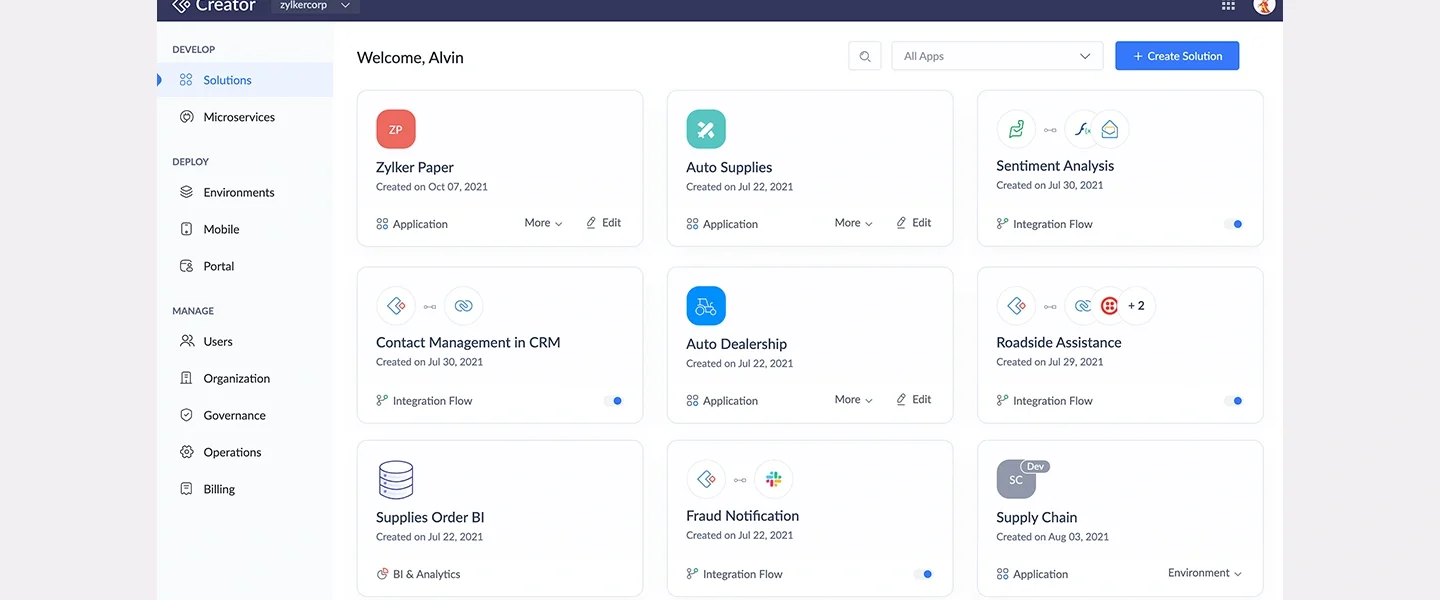
They provide visual, drag-and-drop interfaces and pre-built components—like LEGO blocks for software. Need user authentication, a database, a payment gateway, or an automated workflow? You can often plug these in with a few clicks. This democratization means founders, product managers, and “citizen developers” can directly shape the initial product. The feedback loop tightens from quarters to weeks.
The Spectrum: From No-Code Simplicity to Low-Code Flexibility
It’s not a binary choice. It’s more of a spectrum, and picking the right spot depends on your needs.
| Tool Type | Best For | Example Platforms | Think of it Like… |
| No-Code | Workflow apps, landing pages, internal tools, simple marketplaces, basic mobile apps. | Bubble, Webflow, Adalo, Airtable, Softr | Assembling a sophisticated website with WordPress—no coding, but deep customization possible. |
| Low-Code | More complex business logic, deeper integrations, scalable MVPs, and scenarios where custom code might later be needed. | OutSystems, Mendix, Retool, Microsoft Power Apps | Using a high-end kitchen mixer with attachments—you get a head start, but you can still cook from scratch if you want. |
The key is to match the tool to the problem. Building a quick prototype for a community portal? A no-code platform might be perfect. Validating a fintech concept with complex, conditional logic? A low-code approach that allows for snippets of custom code could be the smarter path.
Crafting Your MVP Strategy with These Tools in Mind
Jumping straight into a platform is tempting. Resist it. The tools are powerful, but strategy comes first. You need a ruthless focus on what “minimum” truly means.
1. Define the Single Core Action
What is the one thing your user must accomplish? Is it booking a service? Trading an item? Getting a personalized report? Strip away every other feature. Your no-code/low-code build should do that one thing smoothly and reliably. Everything else is noise—for now.
2. Map Out Your Integration Points
Honestly, this is where these platforms shine. Most modern business logic is a chain of connected services. Your MVP might be a slick front-end on Bubble that pulls data from Google Sheets via Zapier, sends emails through Mailchimp, and processes payments via Stripe. Sketch this flow on a napkin first. Choose tools that play nicely together—their ecosystem is a core feature.
3. Embrace “Good Enough” Design
Perfection is the enemy of the MVP. These platforms often come with modern, responsive templates and decent styling options. Use them. Don’t get bogged down in pixel-perfect adjustments. The goal is to look credible, not win a design award. User trust comes from solving their problem, not from a custom animation.
The Real-World Trade-Offs: A Clear-Eyed View
It’s not all drag-and-drop sunshine. Being aware of the limitations is part of leveraging these tools wisely.
- Vendor Lock-In Fears: Your product is built on a specific platform. Migrating later can be complex, sometimes like rebuilding. That’s okay if the MVP’s purpose is validation. The plan isn’t to stay on the platform forever, but to use it to prove what should be built permanently.
- Performance Ceilings: As you scale to tens of thousands of users, you might hit performance walls. But that’s a fantastic problem to have—it means your idea has traction! You can then invest in a custom build based on the proven blueprint.
- Customization Limits: You’re confined to the logic and components the platform offers. If your genius idea requires a truly novel interaction or algorithm, you might feel the walls closing in. Low-code can help here, but there’s always a boundary.
The trade-off, then, is control for speed. And in the early stages, speed is almost always the right bet.
From MVP to What’s Next: The Strategic Pivot (or Persevere)
So your MVP is live. Users are trickling in. Data starts flowing. This is the moment of truth. The no-code/low-code tool hasn’t just built your product; it’s built a learning engine.
Maybe the data shows users are using a feature you considered minor in a way you never imagined. With a traditional build, pivoting would be a monumental, costly decision. With your agile setup, you can often reconfigure flows, add new fields, or connect a new service in an afternoon. You’re not just building software; you’re having a conversation with the market.
And if validation is strong? Then you have a clear, user-tested specification for a scalable version. You’ve de-risked the investment. The conversation shifts from “Will this work?” to “Here’s exactly what we need to build.” That’s powerful.
Final Thought: It’s About Leverage, Not Laziness
Some purists scoff, viewing these tools as a shortcut that compromises quality. But that misses the point entirely. Leveraging no-code and low-code for rapid MVP development isn’t about avoiding hard work; it’s about applying your effort strategically. It’s about spending your energy on market discovery, user interviews, and business logic—not on wrestling with boilerplate code for the hundredth time.
In the end, these tools are a testament to a simple idea: the greatest value isn’t in the code itself, but in the unique problem you’re solving for a specific group of people. They let you focus on that. And honestly, that’s where the real magic happens.


